
The Buddhist Answer to Feeling Broken
Sep 24, 2026Are we broken beyond repair, or already free?
I hear the first half of that question every week in my practice, usually phrased more quietly: I've always been like this, nothing works, I can never change. And I ask the same question of the world when I read the news. It is the same question at two scales, and Buddhism gives the same answer to both, though not the answer most people expect. It does not tell you to feel better about yourself, and it does not promise that the damage will be undone. It asks whether the self you believe to be damaged was ever as solid as it feels. Not as end point realization, but as a starting point to work from.
What follows moves between a broken spire on top of Borobudur, the clinical picture of shame, and the teaching of buddha nature. They turn out to be the same story told three ways.

- The Broken Spire
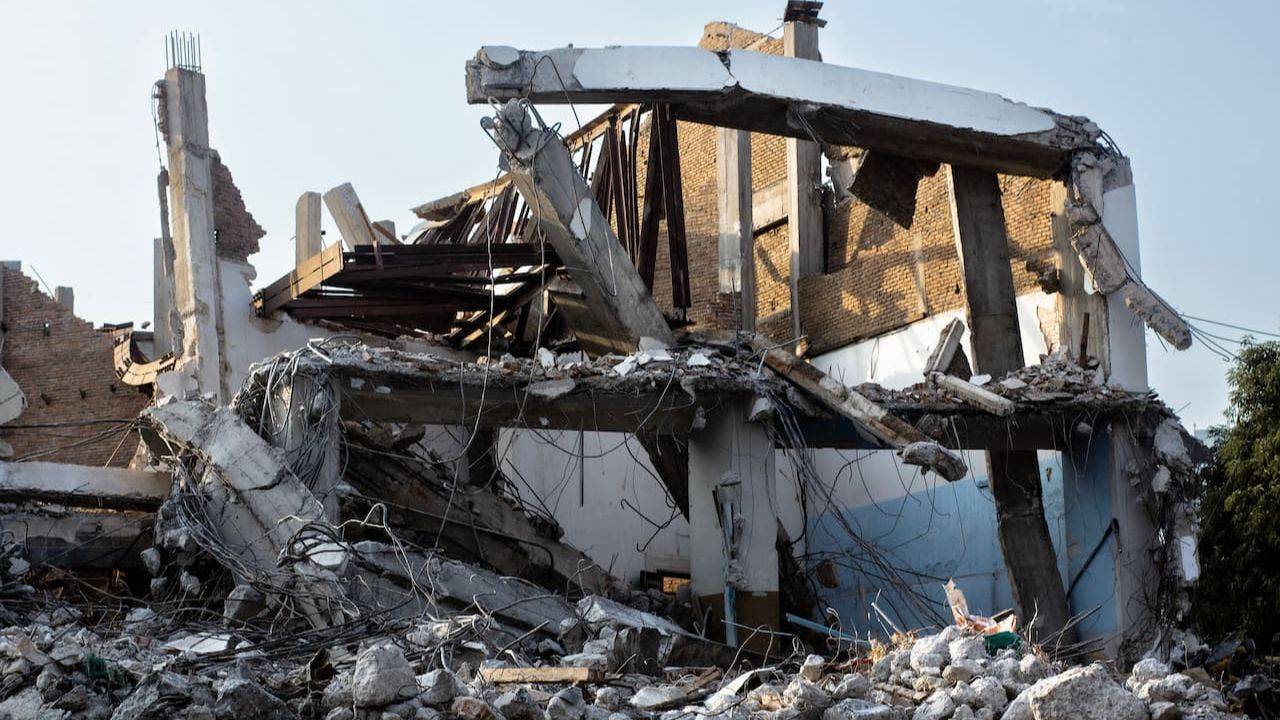
Humanity is on the brink of a third world war, and the Arab-Israeli conflict is but one of many complex global challenges we all face. Given the horrific devastation and loss of life, I ask myself the obvious question: are we broken beyond repair?
It's an existential question that emerged on our recent pilgrimage to the mystical islands of Indonesia led by Geshe Tenzin Zopa, and one that Buddhism offers a nuanced answer to. In last month's newsletter The Stupa Symbol of Unity, I wrote about the broken chatra, or spire, on top of the Borobudur mandala in Java. I want to continue exploring this theme and the many teachings it contains for us.
First, what is a stupa and what does it symbolize? A stupa is not a Buddhist temple; one does not usually enter a stupa for prayer or meditation, one circumambulates it. These bell-shaped structures are reliquaries. They contain within them holy relics of the Buddha or awakened masters, precious texts of his teachings, and other sacred objects imbued with power. I think of them as time capsules or storehouses of wisdom, made to withstand the test of time and inspire future generations. Symbolically, the stupa represents the Buddha's enlightened mind, the luminous, omniscient, all-pervasive dharmakaya.
What exactly is the Buddha's supreme realization? It is a mind that intuitively realizes beyond concepts the fundamentally open nature of reality, called emptiness. Far from a nothingness, emptiness is not a dark void or an abyss. It is the absence of the inherent reality of phenomena, people, places, and experiences, that allows things to change and grow. Emptiness is a metaphoric womb of possibility that births the arisings of all phenomena including samsara, suffering, and nirvana, peace. Emptiness therefore implies transmutability: things can be transformed, like water into ice or vapor, or human adversity into advantage, precisely because nothing, absolutely nothing, has a fixed, independent existence from its own side. Just seeing a stupa reminds us of the mind's ability to directly perceive the radical openness of reality and thus becomes a potent symbol for us to contemplate when things feel intractably dire and desperate.
As a symbol of emptiness, the stupa inspires hope. Like a lighthouse in the darkness, or a telecommunications tower emitting a positive vibration amidst the noise, the large stupa structures that dot the Buddhist world stand tall conveying what is true about our human potential: even amidst our hallucinations and reactivity, we are also capable of incredible clarity and compassion. Samsara is nirvana, and nirvana is samsara; they exist simultaneously not as places but as states of mind.
- What "Broken" Means: The Clinical View
In the therapy room, "I am broken" is rarely a statement about circumstance. It is a statement about identity. Clinically we distinguish guilt from shame: guilt says I did something bad, shame says I am bad. Guilt attaches to an action and can be worked through with remorse and repair; shame attaches to the self and has nowhere to go. Research on self-conscious emotions describes shame not as one more unpleasant feeling but as a collapse of the whole self-concept under the gaze of others, with its own physiological and neural signature. It is less an emotion than a reorganization of how a person experiences being a person.
This is what many people carry into a meditation hall or onto a pilgrimage without ever naming it. They say they feel stuck, that nothing works, that they have always been this way. Underneath the words is a conviction that their fundamental nature is damaged; not that they are suffering, which the dharma has always known how to work with, but that they are constitutionally incapable of being well.
Here Buddhism makes a claim that deserves some precision. It does not say you should feel better about yourself. That is self-esteem, a Western construct and a fragile one. It says the self you believe to be broken does not exist in the way you think it does. This is emptiness, and it is far more radical than reassurance.
Kristin Neff, whose work on self-compassion draws explicitly on Buddhist psychology, describes three movements: self-kindness in place of self-judgment, common humanity in place of isolation, and mindfulness in place of over-identification. Her review in the Annual Review of Psychology found self-compassion reliably associated with less anxiety, depression, and shame, and with greater resilience. Common humanity is the one I return to most often with clients: the recognition that suffering is not a private deficiency but the shared condition of being alive. It is the First Noble Truth in clinical dress.
And yet self-compassion, for all its value, still relates kindly to a self that feels real. Buddha nature goes one step further. The self that feels broken is a misperception; the nature of mind itself has never been damaged by anything that has happened to you. That is a different order of claim altogether, and it is the one the stupa points to.
A word of caution before we go on. For those carrying grief or fresh trauma, emptiness is not where the work begins; sometimes the nervous system needs steadying before the mind can take on a teaching this vast. I have written about that sequencing, and about when therapy has to come before practice, in The Wound Is Not the Whole Story.
- Already Free: The Buddhist Answer
This is why Geshe Tenzin Zopa and Mangku Jito wanted us to "repair" the broken chatra atop the Borobudur with our group's meditative intentions and energy. What they understood was that we first need to see a positive outcome in our mind's eye, a vision of completeness, for us to then strive towards repairing the structure in the physical world. It's a great metaphor. We need to remember it's always possible to heal, make whole, and repair what feels damaged within us and around us in the world. If we suffer depression, hardship, or loss of hope, emptiness understood correctly is considered the ultimate medicine. We should spend far more time envisioning peace than succumbing to fear, contributing to polarization, and descending into violence.
If we want to help anyone, anywhere, we always need to start at home, purifying our perception and opening our hearts.
Back to our existential question. Are we broken? Yes, in a way we are. The stones of the chatra are shattered and missing. Hatred is rampant as people resort to unimaginable destruction. Samsara exists. That's why we follow a spiritual path that combines training in both wisdom and compassion, leading us and others from misery to liberation. But seen from another perspective, no, we are not broken; the chatra is already complete (from the vantage point of enlightenment), and its nature is unbreakable like the human spirit. Nirvana exists as well.
According to the principle of correspondences, "as above, so below, as within so without," the world we perceive outside of ourselves is a macro reflection of what we have cultivated within us. If we are fragmented and assailed by afflictions, the world looks very different from the world perceived by someone with a greater degree of realization. If the metaphoric chatra within us is recognized as whole, then we can step into reality from a place of peace and compassion.
Similarly, the seed of enlightenment known as the buddha nature within us can never be created, nor destroyed, given, or taken away. It belongs not to a privileged few; no special in-group of religious believers can claim it as their own. It is the fundamental ground of every living being, every sentient creature. Because the Buddha or awakened nature is our original condition, nothing ultimately must be repaired or added. We are not original sinners in need of repentance; we are only lost in our nightmare-making and need to be roused from slumber.
The awakened state is a secret, hidden in plain sight, waiting for us to realize. We may feel broken, but in truth what we are is open. As a result, things can get worse: we can regress into deeper states of torment. Or things can improve, and we can evolve into a perfect Buddha. Likewise, we can facilitate the devolution of others, stoking the flames of division, or we can be the condition for others to disarm and discover the latent elixir within them.
I explore how this plays out in the face of collective tragedy, and what polyvagal theory and the dharma each offer when the news is unbearable, in What Buddhism Teaches About Suffering: A Psychotherapist's Guide to Working with Tragedy.
- Why Each Must Walk the Path
Even while the Buddha and many of his heirs through the centuries gained direct insight into emptiness, and thus were liberated from self-imposed suffering, the wars raged on, nevertheless. This is because each being must realize for herself their own nature; it cannot be imparted through blessing or transmitted to another. It's not enough to believe in awakening; it must be cultivated and experienced directly by each in their own time, through their own efforts. We can help others most effectively by embodying virtue and uprooting our own delusion.
That is perhaps the hardest pill to swallow. While humanity standing on the brink of war can and must change, it can only do so through voluntary efforts of everyone seeing through their own distorted projections and misguided reactions. Buddhism has never imposed its worldview on anyone. It has no history of religious conquest, hegemonic jihad, or missionary agenda. In contrast, it offers an open invitation for one to experiment and find out for oneself, like a science experiment, how the mind and reality work. And so we pray that others will examine for themselves, keeping our own minds in as pure a stream as possible.
- Gathering Up the Pieces
At the end of the pilgrimage, I asked Geshe-la, "Are we broken?" He said, "Yes, of course, we are all in samsara, all broken. We are all smashed into pieces. That's why we come on pilgrimage, to gather up the pieces!" Then he said, with a huge smile on his face, laughing, and radiating joy, "But also nothing is broken; in its ultimate nature everything is perfect."
It's hard for me to believe that sometimes from where I sit looking out at our world on the precipice of collapse, but therein lies the whole teaching on emptiness. My pessimistic view leading to paralysis only reflects one contaminated version of reality and contributes very little to the collective field we share. Geshe-la, on the other hand, sees a much vaster horizon of possibilities, and deeper dimensions of reality, widening his circle of care and contributing so much more to the greater good. Because everything is empty of inherent existence, what we do matters. How we see and engage others and the world shapes reality like constructing a mandala made of sand.
In Geshe-la or the Dalai Lama you find people living in the world, responding to the suffering of others, but coming from a more enlightened point of view, undeterred by the malevolence, ever buoyant and patient, driven by compassion. Unfortunately, even the Dalai Lama can't stop the bombs from dropping in yet another war, nor could he spare his people from genocide and exile at the hands of China. His commitment to radical nonviolence and universal compassion takes the higher, much longer, road to inspiring the best for human evolution. It will take all of us envisioning the chatra as complete, all of us realizing we are already whole and free, for peace to pervade. One mind at a time, one step further along the pilgrimage of awakening at a time, this becomes our commitment, and what makes life purposeful and meaningful.
Hopefully, now it's clear why Geshe-la wanted us to visualize a complete chatra for world peace atop the Borobudur, why he reactivated the Pegulingan stupa in Bali during a ceremony on pilgrimage reconsecrating it for future use, and why he plans to build another stupa at Rachen Nunnery in the Himalayas that will last another thousand years. Like radio towers in the darkness, emitting high-frequency waves of hope throughout the centuries, reminding us of who we really are, and calling us home.

- Frequently Asked Questions
What does Buddhism say about feeling broken?
Buddhism would say that the feeling is real, but the conclusion it draws, that you are fundamentally damaged, is a misperception. The teaching of buddha nature holds that the essential nature of every sentient being is already whole and unbreakable, even while the conditions of samsara produce genuine suffering. Feeling broken is evidence of suffering, not evidence of a defective self.
What is buddha nature?
Buddha nature (tathagatagarbha) is the Buddhist teaching that the seed of enlightenment exists within every living being. It cannot be created, destroyed, given, or taken away. It is not a reward for good behavior or a state reserved for the spiritually advanced. It is the fundamental ground of all sentient life. What obscures it is not a structural defect but temporary afflictions: ignorance, craving, and aversion, which the tradition teaches can be gradually purified.
What is the difference between emptiness and nothingness?
Emptiness (shunyata) is not a void. It is the absence of inherent, fixed, independent existence in all phenomena. Because nothing exists in a fixed way, everything can change, grow, and transform. This is why emptiness is sometimes described as a womb of possibility rather than a negation. Emptiness is the condition that makes healing possible, not a statement that nothing matters.
Can feeling broken be a starting point for spiritual practice?
In Buddhism, the recognition that ordinary existence involves suffering is the First Noble Truth, and it is explicitly taught as the starting point of the path, not a disqualification from it. What the tradition asks is not that you stop feeling broken but that you begin to examine the story that brokenness has built about who you are, and whether that story is as fixed as it feels. The contemplative path begins precisely where the pain is, not after you have resolved it through other means.
Is there a connection between Buddhist emptiness and psychotherapy?
Contemplative psychotherapy, the integration of Buddhist philosophy with evidence-based clinical methods, works this territory directly. From a clinical perspective, the sense of being fundamentally broken is often rooted in shame-based identity: a self-concept organized around the conviction that the self is defective. The Buddhist teaching of emptiness does not attempt to repair that self-concept; it questions whether the self-concept, as experienced, was ever an accurate picture of reality. This is a different move from cognitive restructuring or positive reframing. It is a more fundamental inquiry into the nature of the one who believes they are broken.

Miles Neale, Psy.D. is a licensed psychotherapist in private practice, Buddhist teacher, and pilgrimage guide based in Bali. He is the founder of The Gradual Path, and former instructor of psychology and meditation at Weill Cornell Medical College. He is the author of Return with Elixir (Inner Traditions, 2025) and Gradual Awakening, and co-editor of Advances in Contemplative Psychotherapy.
Stay connected with news and updates!
Join our mailing list to receive the latest news and updates from our team.
Don't worry, your information will not be shared.
We hate SPAM. We will never sell your information, for any reason.

